Submit an operations plan
GWCCA policies describe advance coordination of shuttle-bus totals, schedules, and loading or unloading areas with the event coordinator. Start this work well before attendee communications.
Downtown Atlanta convention transportation
A GWCC shuttle plan should identify Building A, B, or C, the event entrance, every hotel curb, peak riders, and a venue-approved ground-transportation plan. GWCCA policy calls for shuttle operations to be coordinated with the event team and describes advance planning for bus schedules and loading areas. Do not treat a campus parking deck or public street as automatic coach staging.
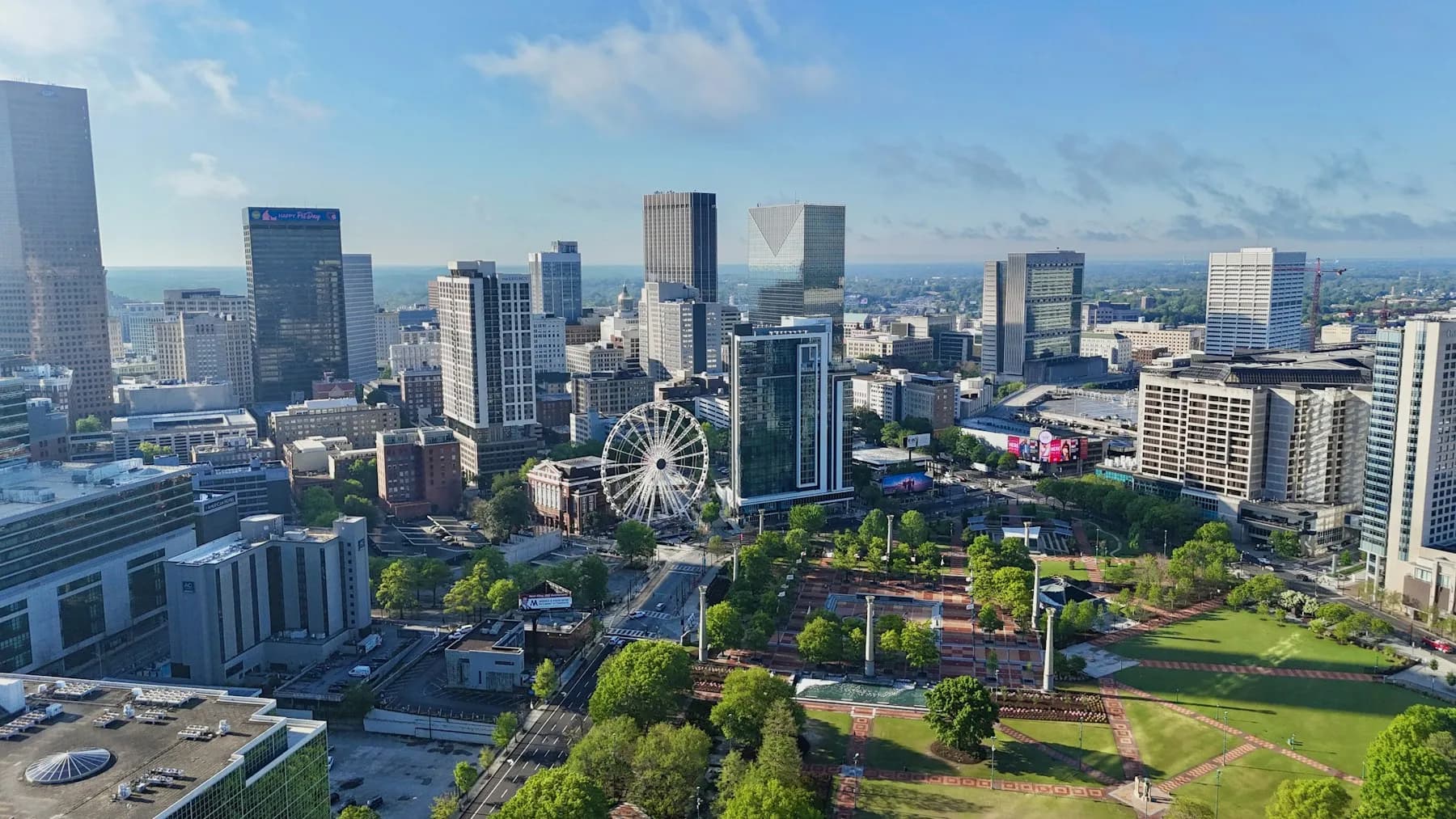
The GWCCA campus can host overlapping events. Tie the transportation plan to the assigned building, hall, and program.
Record the event name, Building A/B/C, registration point, attendee entrance, and event-services contact. Include a map or driver instruction approved for the event.
Ask each hotel for its coach curb, dwell limit, vehicle approach, and competing group schedule. Split routes when downtown traffic or a constrained curb makes a long loop unstable.
Review GWCC, Mercedes-Benz Stadium, State Farm Arena, and Centennial Olympic Park activity for the same date. Overlapping arrivals can affect approaches, parking, and cycle time.
ATL transfers carry luggage and depend on flights; daily convention routes depend on sessions. Price and dispatch them as distinct movements even if vehicles are reused.
The event coordinator, campus transportation plan, traffic control, and current signs govern.
GWCCA policies describe advance coordination of shuttle-bus totals, schedules, and loading or unloading areas with the event coordinator. Start this work well before attendee communications.
GWCCA guidance says Andrew Young International Boulevard and Northside Drive remain active public streets. A coach cannot use them as unscheduled standing or queue space.
GWCCA publishes multiple campus parking decks and lots for event parking. Confirm a coach-specific staging or loading assignment instead of sending buses into a passenger-vehicle facility.
Peak seats, round-trip cycle time, accessible capacity, and approved loading areas determine fleet size.
Use one manifest and one group lead for each coach. Include the event-approved loading area and campus contact in each driver brief.
A smaller footprint can simplify a passenger wave, but it does not create permission to stand, park, or load at an unapproved curb.
Coordinate its loading point with the main shuttle operation so small vehicles do not obstruct coach movements.
These source-linked notes are for planning. On the travel date, follow current agency, airport, property, venue, and American Charterlines instructions.
Use the building, hall, and attendee entrance assigned to the event. Confirm the approved coach loading location with event services before sending riders or drivers.
Do not plan on it. GWCCA notes that surrounding roads remain active public streets. Arrange event-approved loading and off-street staging instead.
Model peak riders, hotel route cycle time, traffic from overlapping campus events, accessible capacity, and recovery margin. Registration totals alone are not enough.
Potentially, but airport service has terminals, permits, flight delays, and luggage requirements. Schedule and price those movements separately before assigning vehicles to hotel loops.
These are the government, airport, transportation authority, venue, and provider pages used for the guide. Check the linked page for the latest operating details.
Share the date, passengers, every stop, timing, luggage, accessibility needs, and essential vehicle features.