Full-size coach
Long-distance trips, large groups, conferences, and multi-day travel.
Dallas–Fort Worth
A Dallas–Fort Worth charter plan should account for long cross-metro distances, terminal-specific airport pickup rules, cashless toll roads, construction, and venue-assigned bus areas. List every stop and passenger wave so the provider can evaluate mileage, timing, staging, luggage, and vehicle needs.
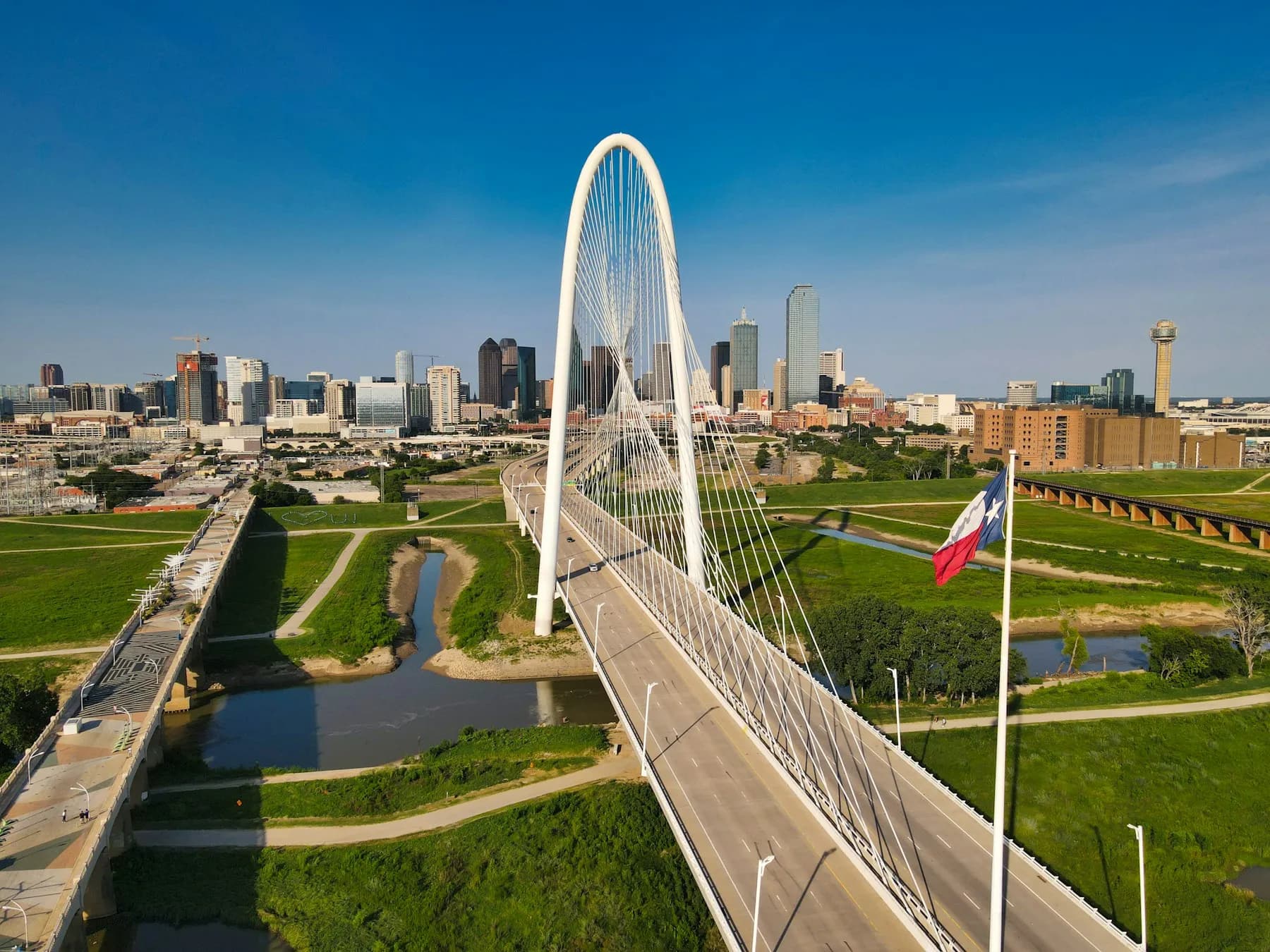
One complete itinerary is more useful than several rough requests.
Date, group size, every stop, timing, luggage, and required amenities.
Get an instant personalized quote based on your itinerary.
Review availability, terms, payment, and vehicle details with the provider.
Choose the vehicle around each passenger wave, the luggage carried, the cross-metro mileage, and the total service hours rather than treating the Metroplex as one short local movement.
Long-distance trips, large groups, conferences, and multi-day travel.
Corporate outings, wedding shuttles, local transfers, and medium-sized groups.
Executive travel, airport transfers, wedding parties, and smaller groups.
Budget-conscious local trips, school events, and short-distance shuttles.
Trip support arranged by American Charterlines
Use the linked airport and venue sources to check current entrances, commercial pickup zones, staging areas, and event-day rules.
Registered charter buses use the lower-level curb at each terminal. Construction can shift ground-transportation stops, so include the flight and terminal and follow current signs.
Buses actively load and unload along the lower-level terminal curb on Herb Kelleher Way. Waiting buses stage separately in the signed area on Aubrey Avenue.
Build separate passenger waves for DFW terminals and Love Field. Luggage, terminal travel, dispatch procedures, and cross-metro destinations affect the vehicle plan.
Phased expansion has changed active areas and entrances. Lower C Driveway is identified as an accessible pickup and drop-off point, but event-specific locations still control.
The stadium assigns bus parking to part of Lot 15 and requires an event-specific bus parking pass. Confirm the current pass and routing instructions.
A Dallas address may be far from a Fort Worth, Frisco, or Arlington destination. Identify each entrance, security procedure, and stop rather than treating the metroplex as one pickup market.
DFW Airport and Dallas Love Field require regulated commercial transportation providers and vehicles to follow airport access and permitting rules.
NTTA toll roads are cashless, and license-plate billing can cost more than TollTag rates. Ask how tolls are handled in the quote.
Use DriveTexas and current venue guidance for construction, closures, weather, and event-day access rather than relying on a fixed travel time.
Use these route patterns to identify every curb, stop, luggage movement, and service window before requesting a price.
Terminal, luggage, passenger wave, toll road, and destination loading instructions can produce materially different transfers.
Map every hotel, ridership estimate, loading point, traffic cycle, and final departure before proposing continuous loops.
Cross-metro service should include exact addresses, realistic travel windows, toll treatment, and the vehicle's final release point.
Local answers for the questions that most often change the itinerary or price.
For early budgeting, use roughly $100–$200 per hour or $900–$1,200 per day. A Dallas–Fort Worth quote also reflects the date, vehicle, route, service window, stops, requested equipment, and distance between Dallas, Fort Worth, Arlington, and suburban stops, cashless NTTA toll roads, DFW or Love Field access requirements, event parking passes and staging, and multi-wave service hours. The instant quote prices the itinerary you submit.
Love Field directs buses to the lower-level terminal curb on Herb Kelleher Way for active loading and unloading. Waiting buses stage separately on Aubrey Avenue, so the group should assemble before the vehicle approaches.
Registered charter buses use the lower-level curb at each terminal. Construction can shift individual stops, so provide the terminal and follow current airport and provider instructions.
Inclusions vary. NTTA roads are cashless, and billing method affects the amount. Ask whether tolls are included, estimated, or added after the trip.
These are the government, airport, transportation authority, venue, and provider pages used for the guide. Check the linked page for the latest operating details.
Share every stop, passenger, timing detail, and essential feature for itinerary-based pricing.