No curb stacking
Use a marshal and timed releases so multiple buses do not arrive at a constrained hotel or venue lane together.
Hotel loops, airport transfers, and convention events
A Miami Beach Convention Center shuttle should use the event's assigned entrance and transportation plan, not only the campus address. Map the legal coach curb at every hotel, establish a venue loading and staging area with the organizer, and calculate service frequency from realistic crossings of Biscayne Bay. Miami Beach traffic, bridge incidents, valet operations, and simultaneous events can change loop times materially.
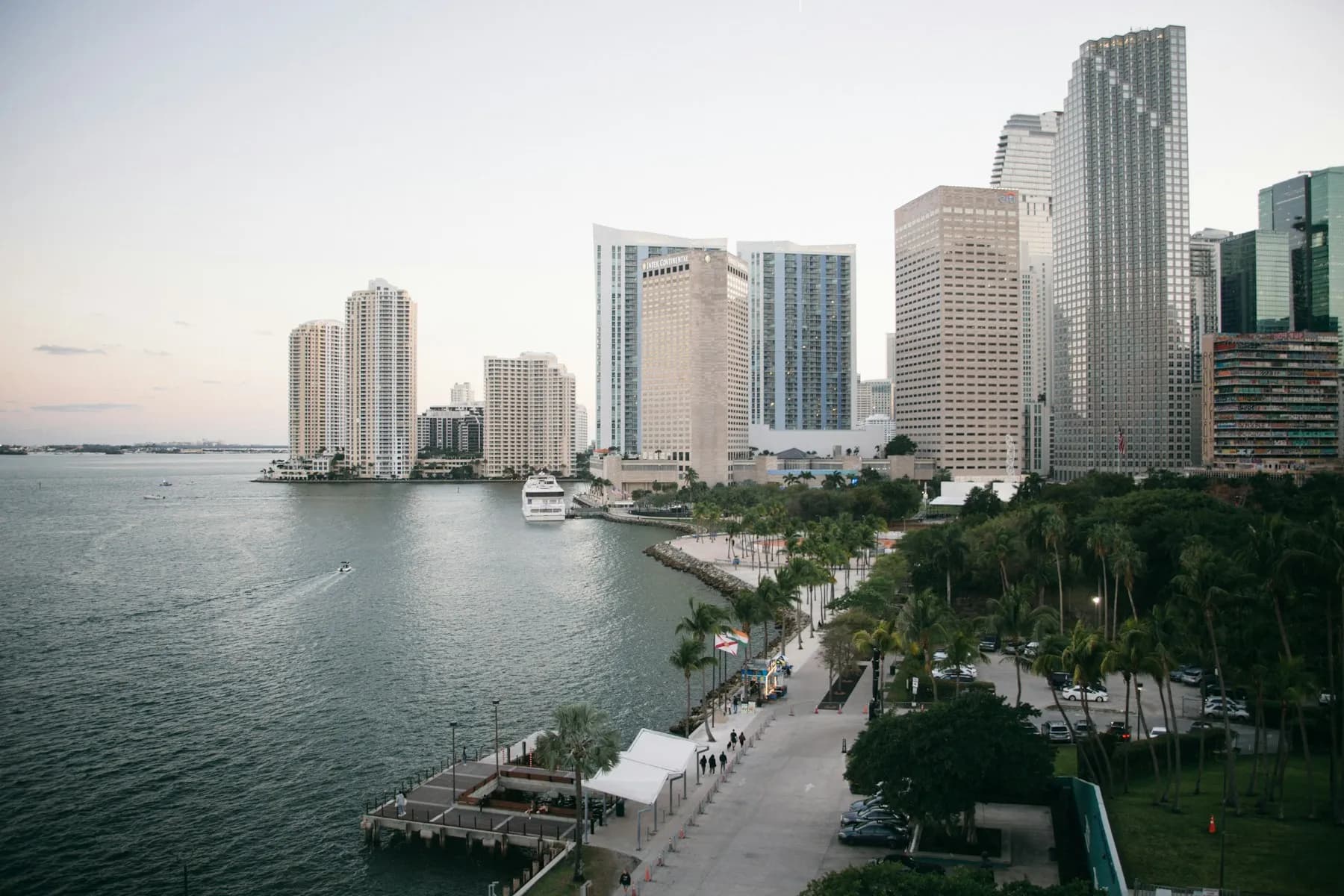
Hotel marketing addresses are not necessarily bus entrances. Verify each curb, then calculate the complete load-travel-unload-return cycle.
Ask the organizer which MBCC entrance, curb, or managed lane serves the group.
Record the coach entrance, loading window, standing limit, and on-site contact for every property.
Use registration and agenda data for morning arrivals, session breaks, and evening functions.
Airport service requires flight data, luggage, commercial curb instructions, and more storage than hotel loops.
Monitor official traffic and keep spare schedule margin rather than promising fixed minutes in all conditions.
The event transportation manager, MBCC, hotels, and traffic officers each control a part of the route. Put their instructions into one dispatch book.
Use a marshal and timed releases so multiple buses do not arrive at a constrained hotel or venue lane together.
The MBCC garage and municipal facilities require explicit oversized confirmation before a bus is routed there.
The convention center points guests to FDOT traffic information and City transportation tools.
Make lift-equipped capacity available during each major wave, not only on request after departure.
At the Miami Beach Convention Center, curb dwell, bridge traffic, hotel spacing, and the sharp pre-session peak determine fleet size more reliably than mileage alone.
Protect baggage-bay space on MIA work and station a marshal at the convention-center unload.
Time a full load, crossing, unload, and return cycle before promising frequency.
Put each movement in dispatch with a named curb rather than treating it as informal overflow.
These source-linked notes are for planning. On the travel date, follow current agency, airport, property, venue, and American Charterlines instructions.
Use the entrance and loading zone assigned by the event organizer or convention center. The public address alone is not enough.
That depends on peak passenger count, actual cycle time, dwell, desired frequency, accessibility, and spare capacity.
Possibly, but airport luggage and waiting can disrupt convention frequency. Quote airport waves separately.
Use official traffic information, realistic causeway margin, dispatcher monitoring, and schedules that do not promise unsupported fixed travel times.
These are the government, airport, transportation authority, venue, and provider pages used for the guide. Check the linked page for the latest operating details.
Share the date, passengers, every stop, timing, luggage, accessibility needs, and essential vehicle features.