Use a permitted ground-transportation company
PortMiami requires companies conducting ground transportation at the port to hold an active business permit and meet insurance and operating-authority requirements.
Cruise group transportation
A PortMiami shuttle should identify the cruise line, ship, assigned terminal, sailing or debarkation date, passenger count, luggage count, and every airport or hotel stop. PortMiami publishes distinct terminal addresses and requires ground-transportation companies operating at the port to hold an active business permit and pay vehicle-class trip fees. Use a permitted provider and reconfirm the terminal shortly before travel.
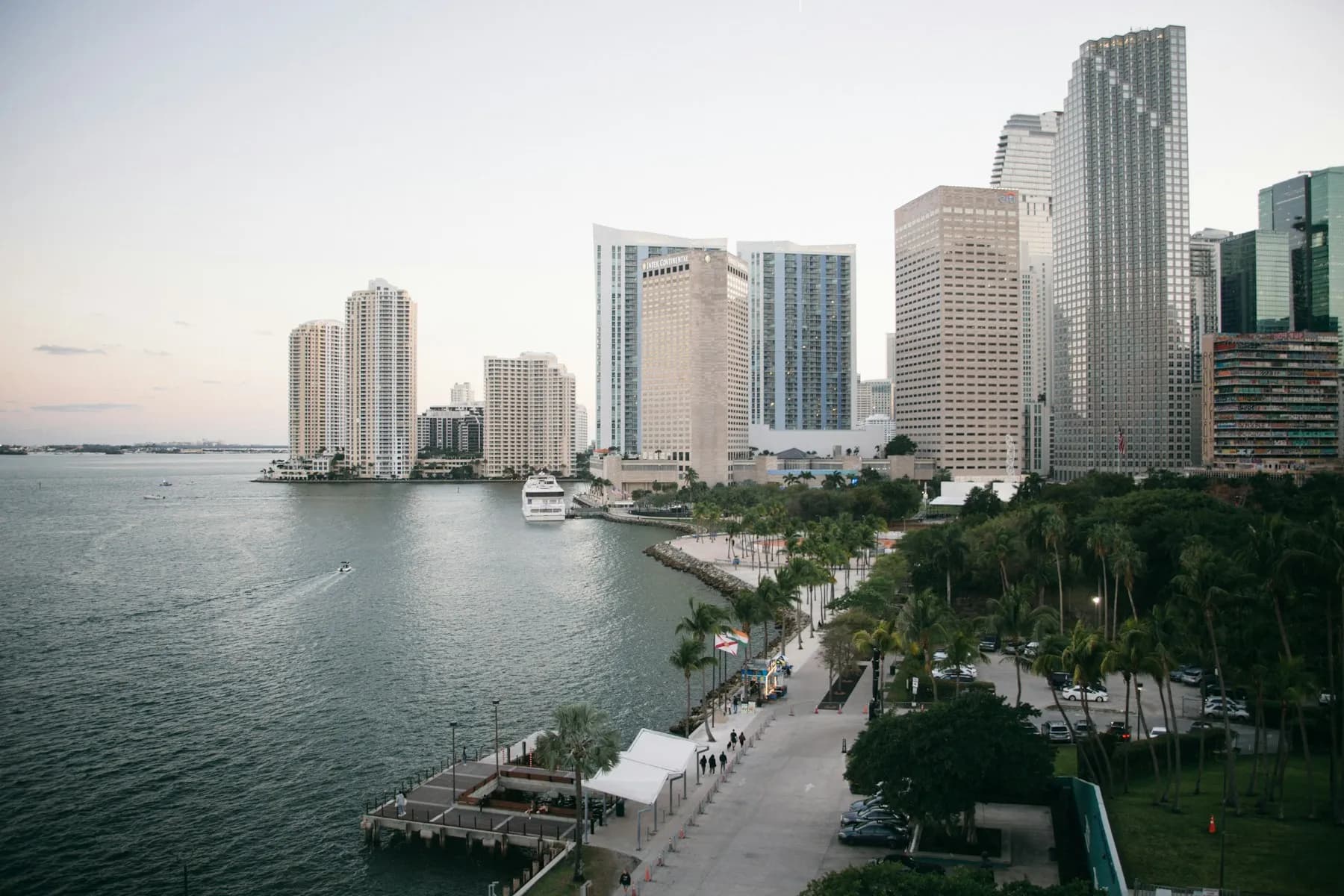
PortMiami has multiple cruise terminals. A ship name and assigned terminal are more useful than a generic port address.
Record cruise line, ship, departure or arrival date, terminal letter, terminal street address, and the cruise line’s check-in or debarkation guidance. Reconfirm close to travel in case the berth changes.
Count passengers, checked bags, carry-ons, strollers, mobility devices, and medical equipment. Ask the provider to confirm that storage remains usable at full seating capacity.
For embarkation, work backward from the cruise-line arrival window. For debarkation, collect flight details, expected customs release, and a coordinator who will call the bus only when the group is assembled.
List MIA or FLL terminal details, Miami hotels, and any pre- or post-cruise activity in order. A split airport group may require separate vehicle waves.
Port security, current terminal assignment, cruise-line direction, and permitted-provider procedures control access.
PortMiami requires companies conducting ground transportation at the port to hold an active business permit and meet insurance and operating-authority requirements.
The port publishes separate per-trip charges for limousines/vans, minibuses, and buses. Confirm whether port fees are included in the written charter quote.
Release timing depends on ship operations, customs, baggage, and passenger assembly. Use the provider’s legal staging plan and one group contact rather than having the coach wait at a terminal curb.
The vehicle must satisfy storage and accessibility needs while matching the provider’s permitted port classification.
Use one manifest and one group lead for each coach. Confirm the PortMiami permit, trip-fee class, terminal access, and luggage capacity.
A smaller footprint can simplify a passenger wave, but it does not create permission to stand, park, or load at an unapproved curb.
Coordinate its loading point with the main shuttle operation so small vehicles do not obstruct coach movements.
These source-linked notes are for planning. On the travel date, follow current agency, airport, property, venue, and American Charterlines instructions.
Use the terminal assigned to the ship for that sailing and its published street address. Reconfirm with the cruise line and provider close to travel because terminal assignments can change.
PortMiami requires ground-transportation companies operating there to hold an active business permit and applicable operating authority. Book a provider that confirms its port access.
Potentially, but separate airports, terminals, flight times, and baggage loads can make one vehicle impractical. Provide the complete post-cruise manifest so the provider can compare routes or waves.
Use the cruise line’s current process and a provider-approved staging plan. Ship clearance, customs, baggage, and group assembly vary, so release the vehicle through one coordinator when passengers are ready.
These are the government, airport, transportation authority, venue, and provider pages used for the guide. Check the linked page for the latest operating details.
Share the date, passengers, every stop, timing, luggage, accessibility needs, and essential vehicle features.